FAQs About Antique Restoration
1. What is antique restoration?
Antique restoration is the process of repairing, refreshing, repainting, refinishing, or reimagining an old, vintage, damaged, or sentimental object so it can be used or displayed again. It may involve cleaning the surface, fixing cracks, restoring colour, adding protective finishes, replacing hardware, or transforming the piece into something more functional for today’s home.
At V’s Art Atelier, antique restoration is not limited to only rare or expensive antiques. We also restore sentimental décor pieces, old trunks, idols, sculptures, keepsake boxes, furniture-style pieces, festive items, and family objects that hold emotional value. The idea is simple: if a piece still matters to you, we help make it beautiful, usable, and loved again.
2. What types of antique restoration does V’s Art Atelier do?
V’s Art Atelier does all types of antique restorations, including idol restoration, statue restoration, trunk restoration, keepsake box restoration, wooden sculpture repainting, décor object revival, furniture-style upcycling, hand-painted transformations, hardware refreshes, and personalised restoration work.
For example, an old Buddha statue can be restored with a rich black-and-gold finish, a dull metal trunk can become a hand-painted coffee table, and a faded mother-and-child sculpture can be refreshed with expressive colours while keeping its original emotion intact. Each piece is treated differently because every object has its own material, purpose, memory, and future role.
3. Can old trunks be restored and reused as coffee tables?
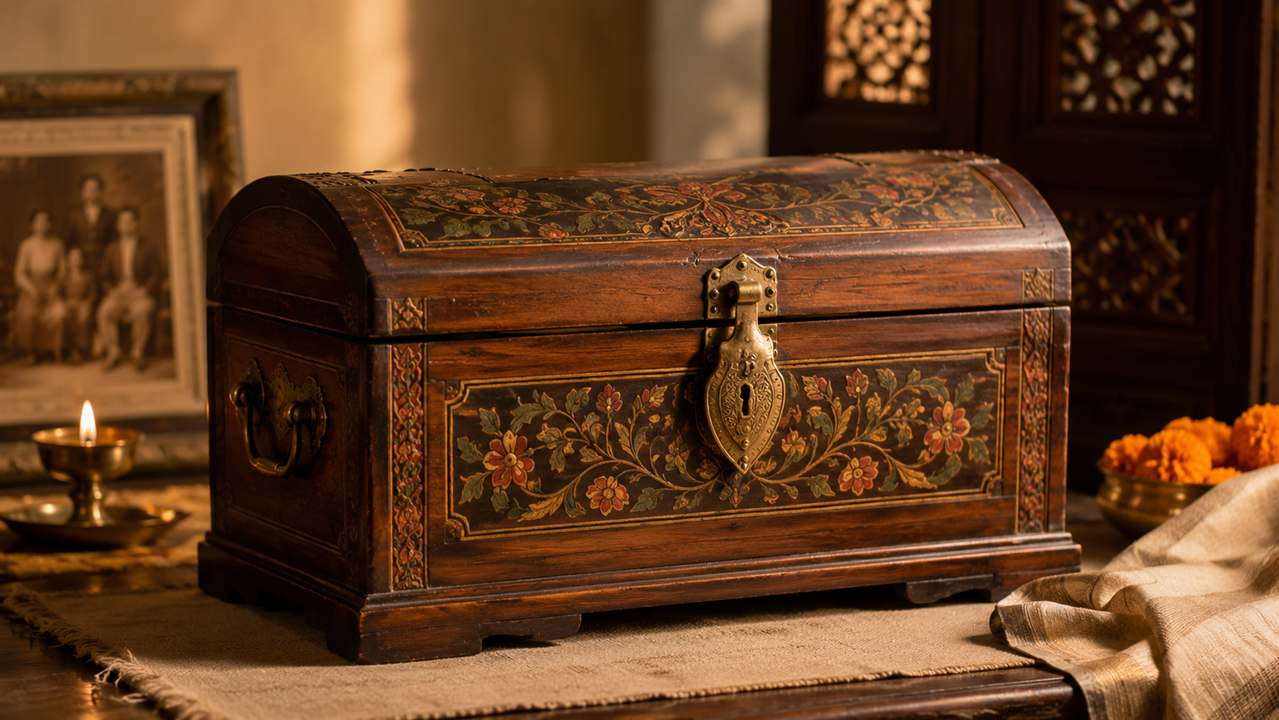
Yes, old trunks are excellent candidates for antique restoration and upcycling. A strong metal or wooden trunk can be cleaned, repaired, painted, fitted with new hardware, given modern legs, and transformed into a statement coffee table or storage table.
This is especially useful for Indian homes where old trunks often carry family history but no longer match modern interiors. Instead of keeping the trunk hidden in a storeroom, V’s Art Atelier can turn it into a décor-led centrepiece that holds blankets, photo albums, wedding keepsakes, festive décor, or family treasures. It becomes practical, beautiful, and full of character.
4. Can a damaged idol or statue be restored?
Yes, damaged, faded, dull, or unfinished idols and statues can often be restored beautifully. Depending on the condition, the process may include surface cleaning, crack filling, repainting, metallic highlighting, detailing, varnishing, and protective finishing.
Spiritual pieces need a sensitive approach because they are not just decorative objects. A Buddha idol, Ganesha idol, Devi figure, or meditative statue may carry faith, ritual, memory, and emotional comfort. V’s Art Atelier restores such pieces with care, making sure the final look feels respectful, elegant, and suitable for a puja corner, meditation space, console table, festive setup, or peaceful home décor corner.
5. Is antique restoration better than buying a new décor piece?
Antique restoration can be better when the old piece has emotional value, strong material, beautiful craftsmanship, or a story you do not want to lose. Buying something new may feel easier, but restoring an old piece gives you something more personal and meaningful.
A restored object already has a past, and after restoration, it gets a new future. That makes it feel richer than a generic décor item. It also supports eco-friendly home décor because you are extending the life of an existing object instead of discarding it. For people who love personalised, handcrafted, and soulful interiors, antique restoration often feels far more satisfying.
6. Can sentimental objects be restored even if they are not technically antique?
Yes, absolutely. Many pieces may not be antique by age, but they are emotionally antique because they hold memory. A sculpture gifted by a loved one, a handmade décor piece from childhood, an old keepsake box, or a family object with personal meaning can all be restored.
V’s Art Atelier often works with sentimental objects that people cannot throw away but also cannot display in their current condition. Restoration helps keep the memory while refreshing the look. The final piece can feel familiar yet renewed, making it perfect for gifting, display, or everyday emotional connection.
7. What is the difference between antique restoration and upcycling?
Antique restoration usually focuses on repairing or reviving an old piece while respecting its original form. Upcycling goes one step further by giving the object a new function or design identity.
For example, restoring an old statue may involve cleaning, repainting, and finishing it so it looks beautiful again. Upcycling an old trunk may involve turning it into a coffee table with hand-painted artwork, new gold hardware, stylish handles, and modern legs. Both approaches preserve the object, but upcycling adds a new role for modern living.
8. How do I know if my antique piece can be restored?
A piece can usually be considered for restoration if it has a stable structure, emotional value, interesting form, good material, or design potential. Look for strong shapes, carved details, metal bodies, wooden bases, meaningful inscriptions, traditional motifs, or sentimental value.
Even if the piece looks dull, scratched, faded, stained, or outdated, it may still have excellent restoration potential. The best way to know is to share clear photos from different angles with V’s Art Atelier. Close-ups of damage, surface texture, cracks, hardware, base, and important details help us understand what can be done.
9. Can antique restoration be personalised?
Yes, antique restoration can be personalised beautifully. Depending on the piece, personalisation may include names, initials, dates, custom colours, meaningful motifs, family symbols, festive themes, handwritten-style messages, or design details connected to the recipient.
This works especially well for wedding gifts, anniversary gifts, Mother’s Day gifts, housewarming gifts, and festive gifting. A restored trunk can become a personalised keepsake chest. A sculpture can be repainted in colours that reflect the recipient’s personality. A box can include a message inside the lid. Personalised restoration turns an old object into a deeply thoughtful gift.
10. Is antique restoration eco-friendly?
Yes, antique restoration is one of the most meaningful forms of eco-friendly décor because it gives existing objects a second life. Instead of discarding old trunks, statues, boxes, or décor pieces, restoration helps reuse and beautify them.
It also reduces unnecessary waste and encourages thoughtful consumption. A restored piece is less likely to be thrown away because it carries memory, effort, and personal emotion. When paired with handcrafted finishes and durable design, restoration becomes a premium yet conscious choice for Indian homes.
11. Can restored antiques be used for gifting?
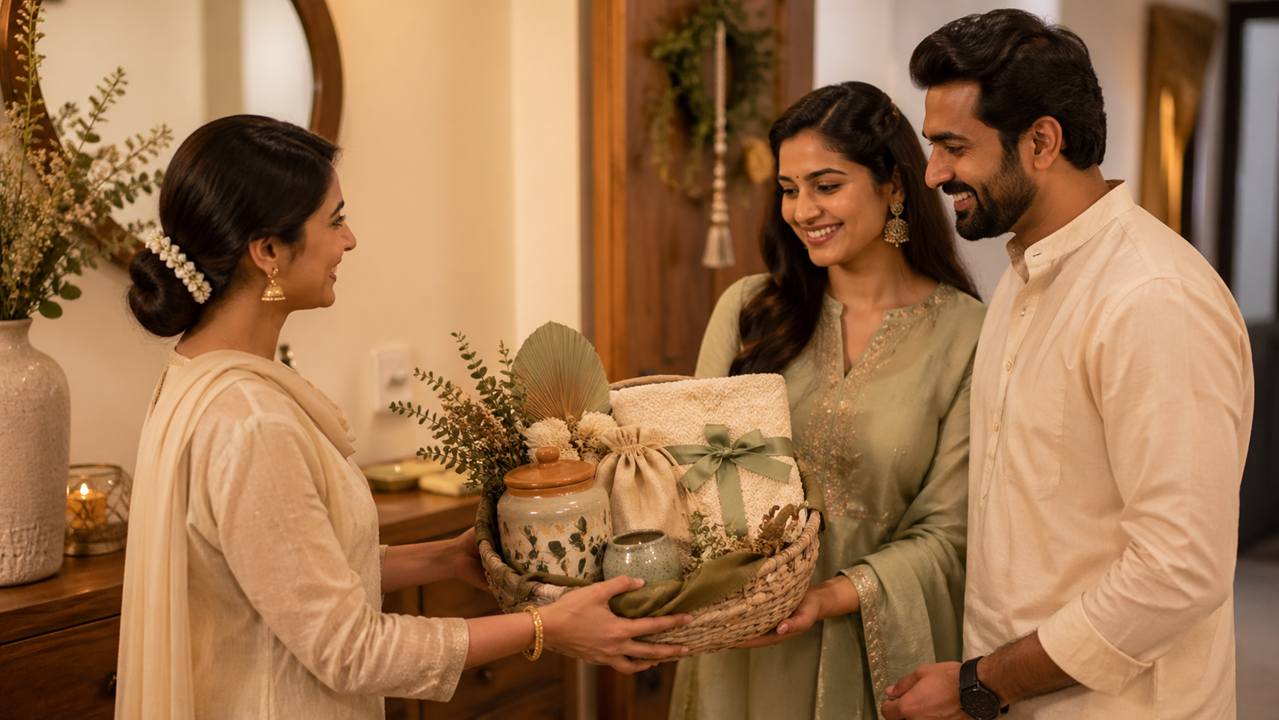
Yes, restored antiques and sentimental objects can make incredibly meaningful gifts. A restored family trunk for a housewarming, a refreshed idol for a festival, a repainted sculpture for a parent, or a personalised keepsake box for a wedding can feel far more thoughtful than a regular gift.
The beauty of restoration gifting is that the object already has a story. You are not just giving a product; you are giving care, memory, effort, and transformation. V’s Art Atelier helps make such gifts display-worthy, premium, and emotionally rich.
12. How long does antique restoration take?
The timeline for antique restoration depends on the size of the piece, material, damage level, drying time, design complexity, detailing, hardware work, and finishing requirements. A small décor object may take less time than a trunk, statue, or furniture-style transformation.
Hand-painted work, personalised detailing, crack repairs, metallic finishes, and protective coatings may need additional time because each layer has to settle properly. Since every piece is different, V’s Art Atelier assesses the object first and then guides you on the expected timeline.
13. Can antique restoration change the original look completely?
Yes, if you want a complete transformation, antique restoration can change the look dramatically while keeping the original structure. An old grey trunk can become a colourful coffee table. A faded statue can become a black-and-gold statement piece. A plain wooden sculpture can be repainted with expressive details.
That said, restoration can also be subtle. Some people prefer to keep the original look and only refresh the finish. Others want a bold redesign that suits a modern home. V’s Art Atelier can follow either direction based on your preference, the piece’s condition, and where you want to place it.
14. What should I send before starting an antique restoration project?
Before starting an antique restoration project, send clear photos of the piece from the front, back, sides, top, bottom, and close-up areas of damage. Also share the approximate size, material if known, where the piece is currently kept, and what you want it to become.
It also helps to share the story behind the piece. Was it inherited? Gifted? Used during festivals? Connected to a parent, grandparent, wedding, or childhood memory? These details help V’s Art Atelier suggest a restoration style that feels visually beautiful and emotionally right.
15. How do I care for an antique after restoration?
After restoration, keep the piece away from harsh sunlight, heavy moisture, rough handling, and strong chemical cleaners. Use a soft dry cloth for regular dusting, and avoid scrubbing unless specific care instructions are given for the finish.
For restored trunks or furniture-style pieces, use coasters, mats, or trays if placing plants, candles, cups, or decorative items on top. For restored idols and sculptures, place them in a clean, stable area where they will not be exposed to water or accidental knocks. Good care helps the restored finish last longer and keeps the piece looking beautiful in your home.