Antique Restoration, Eco-Friendly Gifting, Handcrafted Home Décor, Luxury Gifting, Personalised Keepsakes

Antique Restoration: 34 Lovely Revivals

Antique restoration brings old trunks back as statement décor

Antique Restoration: A Soulful Guide to Preserving Beauty, Memory, and Craft

Why Antique Restoration Feels So Personal

The Emotional Weight of Old Objects

When a Piece Is More Than Décor

Antique Restoration in Indian Homes

Heirlooms, Festivals, and Family Spaces

Why Handmade Details Matter

What Makes an Antique Worth Restoring?

Material, Craftsmanship, and Story

Signs a Piece Needs Gentle Care

Antique Restoration vs. Replacement

The Value of Keeping What Already Has Soul

Sustainability Through Thoughtful Gifting and Décor

How Antique Restoration Complements Premium Gifting

Personalised Keepsakes Inspired by Heritage

Décor-Led Gifts That Feel Timeless

Caring for Restored Antiques at Home

Daily Handling, Cleaning, and Placement

Pairing Old Pieces With New Handmade Décor

Choosing Handcrafted Pieces With an Antique Soul

What to Look for in Artisan-Made Gifts

Making a Home Feel Collected, Not Decorated

Bringing Antique Restoration Into Everyday Living

Antique Restoration: A Soulful Guide to Preserving Beauty, Memory, and Craft

Antique restoration is not just about repairing something old. It is about listening to an object that has already lived a life before it reached your hands. Maybe it is a carved wooden box from your grandmother’s cupboard, a brass diya that appears every Diwali, a hand-painted tray that once sat proudly in the drawing room, or a keepsake frame that has quietly held one family photograph for decades. These pieces do not shout for attention. They whisper. And if you have ever held one, you already know the feeling: this is not clutter, this is memory with texture.

In Indian homes, objects often carry emotion in a way that feels almost impossible to explain. A slightly faded finish can remind you of childhood afternoons. A small crack in a decorative piece may bring back the person who gifted it. The patina on metal, the softness of aged wood, the uneven hand-finished edge of a handmade décor item–these details are not flaws. They are proof that something has been touched, used, loved, and kept.

That is why antique restoration matters. It gives you a way to protect the past without freezing it behind glass. It allows an old piece to become useful, beautiful, and emotionally present again. And when this idea meets handcrafted, personalised, eco-friendly, décor-led gifting, the result feels especially meaningful.

V’s Art Atelier understands that the modern Indian home is not looking for objects that simply fill corners. You want pieces that carry thought, character, and a sense of belonging. Whether you are restoring an antique heirloom, choosing a premium handmade gift, or creating a keepsake for a wedding, housewarming, anniversary, or festive celebration, the deeper question remains the same: will this piece still feel special years from now?

Why Antique Restoration Feels So Personal

The charm of antique restoration begins with one simple truth: old things are rarely just old things. They become emotional landmarks. You may not remember every sofa your family owned, but you might remember the carved wooden stool your grandfather used every morning. You may not remember every festival decoration, but you will remember the brass urli that came out during Diwali, filled with flowers and floating candles. These objects become part of family rhythm. They sit silently in the background until one day, suddenly, you realise they have been holding the room together all along.

Restoring an antique is a little like helping an old song find its tune again. You are not trying to erase its age. You are trying to make sure its age can still be appreciated. A good restoration respects what time has already done. It does not make a piece look factory-new or overly polished. Instead, it strengthens what is weak, refreshes what is tired, and protects what is precious. That difference matters, especially when you care about authenticity.

There is also a quiet kind of joy in choosing restoration over replacement. In a world that keeps asking us to buy faster and discard sooner, antique restoration slows the moment down. It asks you to look closely. What is this piece made of? Who might have used it? Why did someone keep it for so long? When you ask these questions, the object becomes more than décor. It becomes conversation.

This is where handcrafted gifting and restored antiques share the same emotional ground. Both celebrate time, human touch, and intention. A personalised handmade gift from V’s Art Atelier can feel connected to the same world as an heirloom because it is not designed to disappear after one occasion. It is designed to be kept, displayed, remembered, and possibly passed forward.

The Emotional Weight of Old Objects

Have you noticed how certain objects can change the mood of a room the moment they enter it? A vintage mirror does not behave like a new mirror. A restored wooden chest does not feel like ordinary storage. An old brass lamp does not simply provide light; it carries warmth, ritual, and nostalgia. That is the emotional weight of old objects. They bring invisible stories into visible spaces.

In many Indian families, heirloom pieces are tied to ceremonies and milestones. A jewellery box may be opened before a wedding. A decorative tray may be used during a housewarming pooja. A traditional lamp may be lit every festival season. These objects are not always expensive in the obvious sense, but their emotional value is enormous. You cannot easily replace something that has witnessed three generations of celebrations.

That is why antique restoration requires sensitivity. A scratch may look like damage to one person, but to another, it may be part of the piece’s story. A faded colour may not need to be fully covered. A worn edge may deserve stabilising, not disguising. The goal is not to make the object forget its past. The goal is to help it survive beautifully into the future.

This same emotional instinct guides premium keepsake gifting. When you choose a handcrafted décor gift, you are not only thinking about how it looks today. You are imagining where it will live in someone’s home. Will it sit on their console table? Will it become part of their festive styling? Will they remember you every time they see it? The best gifts, like the best restored antiques, do not feel temporary.

When a Piece Is More Than Décor

A piece becomes more than décor when it starts holding meaning beyond appearance. Think of a hand-painted tray used every time guests come home. Think of a personalised nameplate that welcomes people before the door even opens. Think of a keepsake box where wedding notes, family photographs, or baby memories are stored. These are not random objects. They become emotional containers.

Antique restoration helps older pieces reclaim that role. A faded cabinet can become a statement corner. A restored frame can hold a wedding photograph. A vintage bowl can become part of festive tablescaping. Even a small repaired object can change how you experience your space because it brings depth. New décor can create beauty, but old décor often creates belonging.

This is especially important in homes that want warmth rather than showroom perfection. Perfect rooms can feel cold when every object looks untouched. But a home with handcrafted accents, restored heirlooms, personalised keepsakes, and décor-led gifts feels layered. It feels lived in. It feels like someone chose every piece with care, not just urgency.

V’s Art Atelier makes this process easier for you by keeping the focus on handcrafted, personalised, eco-friendly, décor-led gifting. When you are drawn to antique restoration, you are probably also drawn to gifts that feel human-made and emotionally grounded. That is where artisan craft becomes more than a design choice. It becomes a way of living with meaning.

Antique Restoration in Indian Homes

Antique restoration feels especially relevant in Indian homes because our spaces often blend old and new without apology. A modern apartment may still have a family brass diya. A minimalist home may still display a hand-carved wooden piece from the ancestral house. A newly married couple may still receive traditional gifts that carry cultural symbolism. Indian interiors have always had a way of mixing eras, materials, and memories.

This layered way of living gives antique pieces a natural place. We do not always separate tradition from daily life. Festival décor may become year-round décor. A wedding keepsake may sit beside a contemporary vase. A restored family piece may become the emotional centre of a new home. The beauty lies in this conversation between past and present.

Restoration also fits deeply into Indian gifting culture. Weddings, housewarmings, anniversaries, baby showers, festive visits, and family milestones all invite meaningful gifting. But the most memorable gifts are rarely the loudest or trendiest ones. They are the pieces that feel personal, useful, and beautiful enough to keep. A handcrafted premium gift can echo the soul of an antique because both are rooted in care.

There is also a growing appreciation for eco-friendly gifting in India. People want gifts that feel elegant without being wasteful. They want décor that looks refined but does not feel mass-produced. They want personalised pieces that show thought rather than excess. Antique restoration belongs naturally to this mindset because it celebrates preservation, longevity, and conscious beauty.

Heirlooms, Festivals, and Family Spaces

Indian festivals have a magical way of bringing old objects back into focus. The brass lamp comes out. The puja thali is cleaned. The decorative boxes are opened. The old textile runners are unfolded. Suddenly, things that were quietly stored away become central to celebration again. This is where antique restoration can feel less like a project and more like preparation for memory.

Imagine getting ready for Diwali and realising that your grandmother’s brass diya has lost its shine, or your old wooden chowki needs careful repair. You could replace them, of course. But would a new piece feel the same? Probably not. Restoration lets you honour the object while making it ready for the next celebration. It gives the past a seat at the table.

Family spaces also benefit from restored antiques because they add emotional architecture. A living room with only new objects may look polished, but a room with one restored heirloom feels anchored. It tells guests that this home has a story. It invites conversation. It makes people ask, “Where did this come from?” And honestly, isn’t that what meaningful décor should do?

This is also why handcrafted festive gifts have such lasting appeal. A personalised décor piece, an artisanal keepsake, or an eco-conscious gift can become part of someone’s annual rituals. Today it is a gift. Next year it becomes tradition. That is the quiet power of choosing thoughtfully.

Why Handmade Details Matter

Handmade details matter because they carry the presence of the maker. You can see it in a brushstroke, a carved edge, a textured finish, or a tiny variation that proves the piece was not produced without feeling. Antique restoration often reveals the same thing. When an old object is cleaned, repaired, or gently revived, its handmade character becomes visible again.

This is particularly important with vintage wood, brass, ceramic, and hand-painted pieces. Machine-perfect items often look impressive at first glance, but handmade objects invite a second look. They have rhythm. They have small irregularities. They have personality. Restoration helps protect these details instead of flattening them into something generic.

In Indian homes, handmade décor also connects beautifully with cultural memory. Traditional motifs, natural materials, artisanal finishes, and personalised details all speak to a design language that feels familiar yet fresh. You do not need your home to look old-fashioned to appreciate antique-inspired beauty. You simply need pieces that feel honest.

V’s Art Atelier works within this emotional space, where giftable lifestyle products and décor-led keepsakes are created for people who notice the difference. If you are someone who runs your hand over a textured surface before buying it, or pauses at a beautifully finished keepsake because it feels like it belongs somewhere special, you already understand why handmade details matter.

What Makes an Antique Worth Restoring?

Not every old object needs full restoration, and not every worn piece should be polished until it loses its personality. The real question is not, “Can this look new again?” The better question is, “What makes this worth saving?” Antique restoration is most meaningful when the piece has strong material quality, visible craftsmanship, emotional value, or cultural relevance.

Material matters because good materials age differently. Solid wood, brass, copper, stone, ceramic, and hand-painted surfaces often develop character over time. They may need care, but they rarely become meaningless. A well-made object can survive decades because it was built with patience. Restoration simply helps it continue that journey.

Craftsmanship matters just as much. Look for carved details, joinery, hand-painted motifs, traditional shapes, or finishes that show skill. These are signs that a piece was made with intention. Even when damaged, such pieces often have enough soul to justify restoration. The effort feels worthwhile because you are not just fixing an object; you are preserving someone’s craft.

Emotional value may matter most of all. A simple wooden box from your mother’s dressing table may be worth more to you than an expensive decorative item with no story. A slightly chipped keepsake may deserve care because it connects you to a person, place, or phase of life. Restoration is not always about market value. Often, it is about heart value.

Material, Craftsmanship, and Story

When deciding whether to restore an antique, start by looking closely. What is it made of? Does the material feel solid, natural, and durable? Does the finish show age in a beautiful way, or is it actively deteriorating? A brass piece with patina may only need gentle cleaning, while a cracked wooden item may need structural support. The goal is to understand before acting.

Craftsmanship reveals itself through details. A hand-carved border, a painted motif, a shaped handle, or a traditional form can tell you that the piece was created with care. Even imperfections can be meaningful. A handmade object may not be perfectly symmetrical, and that is part of its charm. Antique restoration should protect this character rather than overcorrect it.

Then comes story. Ask yourself where the piece came from. Was it gifted during a wedding? Did it belong to a family elder? Was it bought during travel? Was it part of a festival tradition? The more connected the piece is to your life, the more carefully it deserves to be handled. A restored antique with a story becomes a bridge between generations.

This same thinking can guide new gifting choices. When you select a handcrafted personalised gift, choose something with material honesty, artisan detail, and emotional purpose. A gift should not feel like a placeholder. It should feel like the beginning of its own story.

Signs a Piece Needs Gentle Care

A piece may need restoration when it starts showing signs of weakness rather than simple age. Loose joints, active cracking, flaking paint, unstable surfaces, deep stains, pest damage, rust, or broken decorative elements all need attention. These issues are different from natural patina. Patina can be beautiful. Damage, if ignored, can quietly worsen.

With wooden antiques, watch for wobbling, powdery residue, swelling, or splitting. With brass and metal pieces, look for corrosion that feels rough, green, or uneven. With painted surfaces, notice whether the design is fading naturally or peeling away. With ceramic or stone, check for cracks that may expand. The earlier you respond, the less invasive restoration usually needs to be.

Gentle care is the phrase to remember. Antique restoration should not be aggressive unless absolutely necessary. Over-sanding wood, harshly polishing brass, or repainting without sensitivity can remove the very details that made the object special. When in doubt, take the slower path. Old pieces reward patience.

For everyday homes, this also means storing meaningful objects properly. Keep heirlooms away from excessive moisture, direct harsh sunlight, and rough handling. If you use them during festivals or family gatherings, clean them gently before storing. Treat them like guests of honour, not forgotten items at the back of a cupboard.

Antique Restoration vs. Replacement

The choice between antique restoration and replacement is really a choice between continuity and convenience. Replacement is quick. Restoration is thoughtful. Replacement gives you something new. Restoration allows something meaningful to stay with you. Neither is complicated to understand, but emotionally, they feel completely different.

Many people replace old décor because they assume restoration will be difficult, expensive, or impractical. Sometimes it can be, especially if the damage is severe. But often, a piece only needs cleaning, minor repair, refinishing, or careful placement to become beautiful again. The bigger issue is that we have been trained to think new means better. That is not always true.

An antique piece has already proven its ability to last. It has survived homes, hands, seasons, festivals, moves, and memories. When you restore it, you are choosing not to erase that history. You are saying, “This still belongs here.” That kind of decision gives your home emotional depth.

This does not mean every old thing should be kept forever. Homes need breathing space. But when a piece has beauty, story, craft, or emotional connection, restoration can be far more satisfying than replacement. It creates a home that feels collected, not consumed. It also aligns naturally with eco-friendly décor and sustainable gifting because it values longevity over impulse.

The Value of Keeping What Already Has Soul

A soulful object is hard to define, but easy to recognise. It is the piece your eyes return to. It is the object guests ask about. It is the item you hesitate to discard even when it looks tired. That hesitation is often a clue. Something inside you knows the piece still matters.

Antique restoration protects that soul. It allows you to keep the marks of time while improving the piece’s strength and usability. A restored chest may hold linens again. A repaired frame may display a family portrait. A refreshed brass bowl may return to the festive table. The object does not just survive; it participates.

This is also why premium handmade gifts feel so different from ordinary ones. They have the potential to become soulful over time. A personalised keepsake given at a wedding may one day be part of an anniversary ritual. A handcrafted décor piece given for a housewarming may become the first object placed in every new home. A gift chosen with care can grow into an heirloom.

V’s Art Atelier understands that wedding gifting should not feel rushed or ordinary. Where your “I do” meets a gift that actually says “I love you,” the gesture becomes more than a formality. Wedding season can sometimes feel like a marathon of generic choices and last-minute panic buys, but your gift should be as timeless as the vows being exchanged.

Sustainability Through Thoughtful Gifting and Décor

Sustainability is not always loud. Sometimes it looks like repairing an old object instead of discarding it. Sometimes it looks like choosing a handcrafted gift that will be kept for years. Sometimes it looks like buying fewer, better, more meaningful pieces. Antique restoration fits beautifully into this quieter, more elegant version of conscious living.

Eco-friendly gifting is not only about materials, although materials matter. It is also about emotional durability. Will the recipient want to keep this gift? Will it suit their home? Will it carry meaning beyond the first week? A sustainable gift is one that does not become unwanted clutter. It earns its place.

This is why décor-led gifting works so well when done thoughtfully. A beautiful handmade piece can become part of someone’s daily surroundings. It can sit on a coffee table, entry console, bedside shelf, or festive display. It can be used, admired, and remembered. The more naturally it fits into life, the less likely it is to be forgotten.

Antique restoration teaches us the same lesson. Value is not only created when something is new. Value can be protected, revived, and deepened. When you bring this mindset into gifting, you choose objects that feel slower, warmer, and far more personal.

How Antique Restoration Complements Premium Gifting

Antique restoration and premium gifting may seem like two different worlds at first. One deals with the old, the other with the new. But look closer and they are deeply connected. Both are about creating emotional permanence. Both ask you to think beyond the moment of purchase. Both care about what a piece will mean once it enters someone’s home.

When you gift something handcrafted, personalised, and décor-led, you are giving the recipient a future memory. That may sound poetic, but it is true. Today, they unwrap it. Tomorrow, they place it somewhere special. Years later, they may remember who gave it to them and why. This is exactly how heirlooms begin–not with age, but with meaning.

Premium gifting also benefits from antique-inspired thinking. You may choose natural textures, traditional motifs, hand-finished surfaces, soft metallic tones, or personalised details that feel rooted without feeling old-fashioned. The goal is not to imitate antiques. The goal is to choose pieces that have enough character to age gracefully.

This is especially powerful for Indian weddings, luxury housewarming gifts, festive gifting, and milestone celebrations. These occasions deserve more than something convenient. They deserve something that feels considered. A handcrafted keepsake can carry the same emotional intention as a restored heirloom: “This was chosen for you, not for anyone.”

Personalised Keepsakes Inspired by Heritage

Personalised keepsakes work because they turn a beautiful object into someone’s object. A name, date, message, motif, or custom detail can transform the entire emotional value of a piece. It becomes harder to ignore because it now carries identity. This is why personalised gifts often become keepsakes rather than passing trends.

Heritage-inspired personalisation adds even more depth. Think of details that echo Indian rituals, family milestones, wedding memories, festive symbols, or home blessings. A personalised décor gift does not need to be loud to feel meaningful. Sometimes a subtle name, a soft colour palette, or a carefully chosen design element says more than an elaborate gesture.

Antique restoration reminds us that personal meaning is what makes objects survive. Many heirlooms are not preserved because they are rare. They are preserved because they belonged to someone. They carry association. A newly made personalised gift can begin that same journey when it is crafted with care and chosen for the right occasion.

V’s Art Atelier creates in this space of intentional gifting, where handcrafted design and personal emotion meet. For the reader searching for premium personalised gifts in India, luxury wedding gifting, or eco-friendly festive gifts, the real desire is often simple: you want something that feels worthy of the relationship. That is exactly where keepsake-style gifting shines.

Décor-Led Gifts That Feel Timeless

A décor-led gift becomes timeless when it does not depend too heavily on a passing trend. It should feel current, yes, but not disposable. It should fit into a home without looking generic. It should offer beauty, usefulness, and emotional warmth. That balance is not always easy, but when it works, the gift becomes unforgettable.

Antique-inspired décor can help guide the choice. Natural finishes, handcrafted textures, elegant forms, and personalised elements usually age better than overly flashy designs. A piece that looks graceful in a living room today should still feel charming years later. That is the standard worth aiming for.

For weddings, décor-led gifts can help couples build a home that feels intimate rather than impersonal. For housewarmings, they can bring warmth to a new space before memories have fully formed there. For festivals, they can become part of annual rituals. In each case, the gift does more than decorate. It participates in life.

This is why antique restoration is such a useful lens for modern gifting. It reminds us to ask better questions. Will this piece last emotionally? Will it feel meaningful after the occasion ends? Will it look better with time? When the answer is yes, the gift becomes more than a product. It becomes part of someone’s home story.

Caring for Restored Antiques at Home

Once an antique has been restored, the next step is care. This is where many people become nervous, but caring for restored antiques does not have to feel complicated. Think of it like caring for a plant. You do not need to obsess over it every hour. You simply need to understand what helps it stay healthy.

Placement is one of the biggest decisions. Avoid harsh sunlight if the piece has paint, polish, fabric, or delicate finishing. Keep wooden objects away from damp walls and extreme humidity. Do not place metal antiques where they will regularly collect moisture. These small choices can protect years of restoration work.

Cleaning should also be gentle. A soft dry cloth is often better than chemical-heavy products. For brass, wood, or painted surfaces, always be careful with strong cleaners because they can strip finishes or create uneven marks. The more historic or emotionally valuable the piece, the more cautious your cleaning should be.

Restored antiques also look beautiful when styled with handcrafted contemporary décor. You do not need to create a museum corner. Pair an old brass piece with fresh flowers. Place a restored tray with a personalised candle or keepsake. Let an antique frame sit near newer handmade accents. The contrast makes both old and new feel richer.

Daily Handling, Cleaning, and Placement

Daily handling matters because damage often happens through small habits. Dragging a wooden piece across a surface, stacking heavy items on a delicate tray, using water-heavy cleaning methods, or placing a restored object near heat can slowly reduce its life. None of this is dramatic in the moment, but over time, it shows.

Handle restored pieces with both confidence and care. They are meant to live, not hide. Use them when appropriate, display them proudly, and let them remain part of your home. But also give them the respect you would give anything with age and emotional value. Lift instead of dragging. Dust instead of scrubbing. Protect instead of overusing.

Placement can change everything. A restored wooden box on an entry console may look stunning, but if the area gets direct rain spray during monsoon, it is not ideal. A brass diya may look lovely in a humid bathroom-style corner, but moisture can affect the surface. Good styling is not only about beauty. It is about understanding the material.

This is also true for new handcrafted gifts. When you receive or give décor-led products, think about how they will live in the home. A thoughtful gift becomes even better when the recipient knows where and how to use it. The right placement turns an object into a daily delight.

Pairing Old Pieces With New Handmade Décor

Pairing restored antiques with new handmade décor is one of the easiest ways to create a home that feels layered. You do not need every item to match. In fact, too much matching can make a room feel flat. What you want is harmony. Let textures, colours, and materials speak to each other.

A restored wooden piece can sit beautifully beside hand-painted décor. A brass antique can glow near earthy ceramics. A vintage frame can become softer when styled with a personalised keepsake. A traditional object can feel fresh when placed in a clean, modern setting. The secret is contrast with intention.

This approach also makes gifting more meaningful. When you choose a handmade gift, imagine how it might sit alongside the recipient’s existing pieces. Do they love warm tones? Do they enjoy festive styling? Are they building a new home? Do they appreciate personalised details? A gift chosen with this level of attention rarely feels random.

V’s Art Atelier speaks to readers who want gifts and décor that feel collected, crafted, and emotionally intelligent. If your home already has antiques, handmade accents can support them beautifully. If your home is newer, handcrafted keepsakes can add the first layer of soul. Either way, the goal is not perfection. The goal is presence.

Choosing Handcrafted Pieces With an Antique Soul

A piece does not need to be antique to have an antique soul. It simply needs character, craft, and emotional staying power. When choosing handcrafted products, look for details that feel human. Texture, finish, colour depth, personalised design, and material quality all matter. These are the things that help a new piece age gracefully.

An antique soul also comes from intention. Why are you buying this piece? Is it for a wedding couple beginning a new life? A friend moving into a new home? A family celebrating a festival? A loved one who appreciates artful keepsakes? When the reason is meaningful, the object has a better chance of becoming meaningful too.

This is where premium gifting becomes less stressful. Instead of chasing what is popular everywhere, you can focus on what feels lasting. Handcrafted personalised gifts, eco-friendly décor pieces, festive keepsakes, and giftable lifestyle products all work best when they match the recipient’s world. The right gift feels like it already knows where it belongs.

Antique restoration teaches us that the most loved objects are not always the most expensive. They are the ones that hold attention over time. They remind us of people, places, rituals, and moments. When you choose a handcrafted gift with that same mindset, you are not simply buying décor. You are choosing future nostalgia.

What to Look for in Artisan-Made Gifts

When selecting artisan-made gifts, start with material honesty. Does the piece feel durable? Does it have a finish that will age well? Is it easy to place in a home? A gift should be beautiful, but it should also be liveable. The best pieces do not require the recipient to redesign their entire space around them.

Next, look at craftsmanship. Handmade details should feel intentional, not careless. Slight variations are charming when they show human touch. Uneven quality, weak construction, or impractical design are different matters. A premium handmade gift should offer both soul and reliability.

Personalisation is another key detail. A custom name, date, message, or design element can make the gift feel deeply considered. For weddings, anniversaries, and housewarmings, this matters even more. People remember gifts that were clearly made for them. They also tend to keep them longer.

Finally, think about emotional fit. Would the recipient actually enjoy displaying this? Does it suit their rituals, taste, or lifestyle? Would it feel appropriate for the occasion? V’s Art Atelier keeps this kind of thoughtful gifting at the centre, especially for readers searching for premium handmade gifts in India, personalised home décor gifts, and eco-friendly festive gifting that feels refined rather than routine.

Making a Home Feel Collected, Not Decorated

A decorated home can be beautiful, but a collected home feels alive. The difference is emotional layering. A collected home has pieces from different times, places, people, and occasions. It may include restored antiques, handcrafted gifts, family heirlooms, travel finds, festive décor, and personalised keepsakes. Nothing feels accidental, even when everything is not perfectly matched.

Antique restoration plays a powerful role here because it allows older pieces to remain part of daily life. Instead of hiding them away, you can style them thoughtfully. A restored box might hold letters. A vintage tray might display candles. A family frame might sit near newer handmade décor. These combinations make a home feel intimate.

Handcrafted gifts add another layer to this story. Every meaningful gift becomes a marker. “This was from our wedding.” “This came when we moved in.” “This was gifted during Diwali.” Over time, these pieces stop being just products. They become emotional timestamps.

This is why the best interiors are not built in a single shopping day. They evolve. They gather meaning. They hold onto certain things and release others. A home with antique soul does not need to look old. It simply needs to feel remembered.

Bringing Antique Restoration Into Everyday Living

Bringing antique restoration into everyday living starts with changing how you see the objects around you. Before you discard an old piece, pause for a moment. Ask whether it has material strength, emotional value, or design character worth preserving. Ask whether a little care could bring it back into your life. Sometimes the answer will be no, and that is fine. But sometimes the answer will surprise you.

You can also bring the spirit of restoration into the way you gift. Choose pieces that are handcrafted, personal, eco-conscious, and décor-led. Choose gifts that feel like they will still matter after the event is over. Choose keepsakes that can sit comfortably in Indian homes, whether the occasion is a wedding, housewarming, anniversary, festive celebration, or intimate family milestone.

V’s Art Atelier understands that meaningful gifting should not feel rushed or ordinary. We make this process feel easier by keeping the focus on handcrafted, personalised, eco-friendly, décor-led gifting that feels warm, premium, and deeply human. When a gift is chosen with care, it can become part of someone’s rituals, rooms, and memories.

So the next time you see an old family piece with a tired finish, do not dismiss it too quickly. And the next time you choose a new gift, do not settle for something forgettable. Somewhere between antique restoration and handcrafted gifting lies a beautiful idea: objects can carry love when they are made, chosen, restored, and kept with intention.

What “All Types of Antique Restorations” Can Look Like in Real Homes

Antique restoration can begin with almost anything: a spiritual idol that has lost its finish, a metal trunk sitting forgotten on a balcony, a wooden sculpture with faded polish, or a keepsake object that still means something but no longer feels display-ready. That is the beauty of this craft. It does not ask every piece to be rare, expensive, or museum-worthy. It simply asks one question: does this object deserve another chapter in your home?

At V’s Art Atelier, we do all types of antique restorations, and the examples shared show exactly how wide that world can be. A dusty Buddha idol can become a striking décor piece with depth, shine, and meditative presence. An old storage trunk can be transformed into a hand-painted coffee table with new gold hardware, stylish handles, and modern hairpin legs. A weathered box can become a soft, elegant centre table with painterly details and a premium finish. A sentimental mother-and-child sculpture can be refreshed with colour, warmth, and personal emotion while still keeping its original soul intact.

And that is the part you should notice. Restoration does not always mean making something look “old but clean.” Sometimes it means reimagining the piece completely. Sometimes it means keeping the original form but giving it a new personality. Sometimes it means enhancing details that were always there, but hidden under dust, dullness, or years of neglect. Think of it like giving an old song a new arrangement. The melody remains familiar, but suddenly, it belongs in today’s room.

This is especially useful for Indian homes, where so many objects are tied to memory but do not always match newer interiors. You may have a trunk from your parents’ home, a statue from an old puja corner, a wooden panel from a family house, or a decorative object that feels too sentimental to discard but too tired to display. Antique restoration gives you the middle path. You do not have to lose the memory, and you do not have to compromise your home’s style either.

Idol and Statue Restoration for Spiritual Corners That Feel Alive Again

A spiritual idol has a different emotional weight from ordinary décor. Whether it is a Buddha statue, a Ganesha idol, a Devi figure, or another sacred or meditative piece, it often carries calm, faith, ritual, and personal history. When such a piece becomes dull, chipped, faded, or stained, the decision to restore it can feel deeply personal. You are not just improving how it looks. You are giving respect back to something that may have been part of your home’s daily rhythm.

The Buddha restoration example shared captures this beautifully. The “before” piece has a soft, unfinished, weathered look, almost like it has been waiting quietly for attention. The “after” version feels dramatic and premium, with a rich black finish, gold detailing, highlighted folds, and a polished presence that instantly turns it into a focal point. It does not look like a random decorative statue anymore. It feels intentional, styled, and ready for a peaceful corner, console table, meditation space, entryway, or festive arrangement.

This kind of antique restoration works well when the original form is strong but the surface no longer supports its beauty. A statue may have wonderful carving, graceful posture, expressive features, or symbolic value, but years of dust and fading can flatten those details. Through careful cleaning, surface preparation, colour treatment, highlighting, sealing, and finishing, the form comes forward again. The curves become visible. The expression becomes stronger. The entire piece begins to hold light differently.

If you have an idol at home that you are unsure about, look at it slowly. Does it still have a shape you love? Does it belong to a prayer corner, meditation zone, family memory, or festive display? Would it feel meaningful if restored instead of replaced? V’s Art Atelier can help turn such pieces into décor-led spiritual keepsakes that feel personal, premium, and deeply rooted in Indian homes.

Trunk Restoration That Turns Storage Into Statement Décor

Old trunks are some of the most exciting candidates for antique restoration because they carry history and practicality at the same time. In many Indian homes, trunks were once used for clothing, documents, wedding textiles, keepsakes, or travel. They were strong, spacious, and reliable. But over time, they often get pushed into storerooms, balconies, terraces, or forgotten corners because they look too heavy, dull, rusty, or outdated for a modern living room.

Now pause and imagine that same trunk differently. What if the metal surface becomes a canvas? What if the old hardware is refreshed or replaced with stylish gold accents? What if modern legs lift the piece visually and turn it into a coffee table? What if the top becomes a hand-painted surface that brings colour, pattern, and personality into the room? Suddenly, what looked like junk becomes the most talked-about piece in the house.

The before-and-after trunk examples show this transformation clearly. One grey storage trunk becomes a colourful, hand-painted coffee table with stencil-inspired details, gold hardware, hairpin legs, and chic handles. Another weathered trunk becomes an elegant cream-and-gold table with a painted top, soft metallic accents, and a refined living-room presence. These are not tiny changes. They are full personality shifts. The object’s function expands from storage to statement décor, while its original structure still gives it character.

This is where V’s Art Atelier’s restoration approach becomes especially interesting for people who love handcrafted home décor. A restored trunk can be used in a living room, bedroom, reading nook, balcony lounge, studio corner, or even as a keepsake chest for wedding memories. It can hold blankets, photo albums, heirloom textiles, festive décor, or family treasures while looking beautiful from the outside. That is the sweet spot: antique restoration that is useful, emotional, and visually striking.

Custom Antique Restoration for Sentimental Sculptures and Keepsakes

Some objects are not antique in the strict historical sense, but they are antique in the heart. A sculpture gifted years ago, a wooden figure from a parent’s home, a handmade piece from childhood, or a décor item with a personal inscription can carry more emotion than a costly showpiece. When such pieces fade, crack, or lose their finish, throwing them away can feel strangely wrong. You may not know where to place them anymore, but you also cannot let them go.

The mother-and-child sculpture example is a perfect reminder of this. The original piece already had tenderness. The form showed a mother holding her child, with an “I love u mom” message that gave it a personal, handmade feeling. But the older finish looked muted and tired. After restoration, the same sculpture becomes warmer, brighter, and more expressive. The yellow saree, red blouse, defined eyes, detailed hair, and refreshed polish make the emotion easier to see. The piece feels alive again, not because its memory changed, but because its presence became stronger.

This kind of restoration is not about hiding the past. It is about honouring it in a way that suits today’s home. Sentimental objects can be refreshed with colour correction, repainting, varnishing, detail enhancement, surface strengthening, and personal customisation. Sometimes a piece needs a subtle touch. Sometimes it asks for a bolder transformation. The right choice depends on the object, the material, the recipient, and the feeling you want to preserve.

V’s Art Atelier understands that these pieces are often tied to relationships. A sculpture from a mother, a keepsake from a child, a handmade gift from a spouse, or an object connected to a family milestone should be handled with patience. When we work on sentimental antique restoration, the goal is not to make every object look identical to a catalogue piece. The goal is to bring back the feeling that made you keep it in the first place.

Restoration for Pieces That Are Damaged, Dull, or Simply Forgotten

Not every piece arrives dramatically broken. Sometimes the issue is dullness. Sometimes the polish has faded, the paint has yellowed, or the surface has collected scratches. Sometimes the hardware has lost shine, or the object simply does not match the home anymore. These are the pieces people often ignore because they do not look “bad enough” to restore. But that is exactly where the magic can happen.

A dull object may still have strong bones. An old trunk may still be sturdy. A statue may still have beautiful posture. A box may still have the right proportions for a coffee table. A wooden figurine may still hold sentimental value. Antique restoration helps you see potential before you give up on the piece. It is a little like looking at an old family photograph and realising the frame, not the memory, is what needs refreshing.

The before-and-after images shared show how ordinary-looking pieces can become elevated through thoughtful surface work. The metal trunk does not remain a storage box. It becomes a décor-led centrepiece. The old brown box does not remain weathered and forgotten. It becomes elegant enough for a modern living room. The statue does not remain pale and unfinished. It becomes rich, dramatic, and display-worthy. These transformations are not accidental. They happen through design thinking, material understanding, and handcrafted finishing.

This is also why antique restoration is not limited to one category. V’s Art Atelier can work with spiritual idols, wooden sculptures, old trunks, keepsake boxes, decorative objects, furniture-style pieces, festive items, and personalised heirlooms. The common thread is not the object type. The common thread is the intention to preserve, beautify, and make the piece meaningful again.

Before-and-After Transformations That Help You Imagine Your Own Piece

Before-and-after visuals are powerful because they make potential visible. You may look at an old object in your own home and think, “Nothing much can be done with this.” Then you see a trunk become a centre table or a faded idol become a polished statement piece, and suddenly your imagination wakes up. You start seeing not what the object is today, but what it could become.

That moment is important. Most restoration decisions begin with possibility. A customer may send a photo of an old object and ask, “Can this be saved?” Very often, the better question is, “What life do you want this piece to have now?” Do you want it to look traditional? Modern? Festive? Minimal? Hand-painted? Gold-accented? Personalised? Useful? Display-only? Once that direction is clear, antique restoration becomes a creative collaboration rather than a repair job.

The trunk restorations show one route: functional upcycling with decorative finish. The Buddha restoration shows another route: surface transformation with spiritual elegance. The mother-and-child sculpture shows a third route: emotional colour revival and detail enhancement. Each object receives a different treatment because each object has a different purpose. That is how restoration should work. It should respond to the piece, not force one standard look onto everything.

So, take a slow walk around your home. Look at the objects on high shelves, inside cupboards, below beds, in storerooms, or tucked away in balcony corners. Is there a piece you have not used in years but still feel attached to? Is there something you inherited but never displayed because it looks worn? Is there a gift you love emotionally but not visually? V’s Art Atelier can help you explore whether that object can return as handcrafted, personalised, eco-friendly, décor-led beauty.

How V’s Art Atelier Approaches Antique Restoration

Every antique restoration project begins with listening–to you and to the piece. The object usually has two stories. One is physical: what material it is made of, what condition it is in, what damage exists, and what kind of finish it can safely hold. The other is emotional: why you kept it, who gave it to you, where it lived before, and what you want it to become now. Both matter.

A trunk that belonged to a grandparent cannot be treated like a random décor object. A spiritual idol cannot be approached like casual furniture. A sentimental sculpture with a personal message cannot be repainted without thinking about the feeling behind it. This is why restoration needs conversation. You may want a bold makeover, or you may want the lightest possible refresh. You may want to preserve every old mark, or you may want the piece reimagined for a completely new room. The right answer is not fixed. It is discovered.

The design direction is then shaped around the object’s future life. Will it be placed in a living room? A puja corner? A bedroom? A balcony garden? A wedding memory corner? A festive display area? A restored piece should not only look beautiful in a close-up photograph. It should work in the home where it will live. That is why colour palette, finish, hardware, placement, and usability all matter.

V’s Art Atelier makes this process easier for you by keeping the focus on handcrafted, personalised, eco-friendly, décor-led gifting and restoration. We are not interested in making your piece look like everyone else’s. The charm lies in custom work. Your object has its own story, and the restored result should feel like it belongs to you.

Assessment: Understanding Material, Damage, and Possibility

The first practical step in antique restoration is assessment. This may sound technical, but it is really just a careful look. Is the piece wooden, metal, stone, ceramic, resin, terracotta, fibre, or mixed material? Is the structure stable? Are there cracks, rust patches, missing parts, fading, peeling, dents, stains, or loose components? Does the piece need repair before beautification? These questions help decide what is possible.

For example, a metal trunk may need surface cleaning, rust management, priming, painting, hardware replacement, and sealing. A wooden sculpture may need sanding, crack filling, repainting, detailing, and varnishing. A spiritual idol may need careful cleaning, base colour work, metallic highlighting, and protective coating. A keepsake box may need both structural repair and decorative redesign. Each material behaves differently, and the restoration plan should respect that.

This is also where realistic expectations matter. Some marks can be removed. Some can be softened. Some should remain because they are part of the piece’s character. The goal of antique restoration is not always perfection. In fact, too much perfection can make a restored object feel artificial. A thoughtful finish allows the object to look renewed while still carrying the dignity of age.

When you share a piece with V’s Art Atelier, photos from different angles can help begin this assessment. Close-ups of damage, hardware, corners, base, surface texture, and any sentimental details are especially useful. The better we understand the object, the better we can suggest a restoration direction that feels beautiful, practical, and emotionally right.

Design Direction: Traditional, Modern, Festive, or Personalised

Once the piece is assessed, the design direction begins. This is often the most exciting part because it is where your taste enters the restoration. Do you want a traditional antique finish with gold accents? A modern pastel look? A festive hand-painted surface? A heritage-inspired motif? A personalised message? A décor-led redesign that suits your living room? There are many ways to revive a piece, and the best one depends on how you want to feel when you see it every day.

The Buddha example leans into a dramatic, premium spiritual aesthetic with black and gold tones. The trunk transformations lean into functional artistry, turning old storage into painted furniture-style décor. The mother-and-child sculpture leans into emotional colour revival, making the figure warmer and more expressive. These directions are all different, but each one respects the object’s purpose.

For Indian homes, this flexibility is valuable. Some people want restored pieces to look festive and ornate. Others prefer muted, earthy, elegant tones. Some want hand-painted florals, traditional motifs, or metallic detailing. Others prefer clean finishes that blend into contemporary interiors. Antique restoration does not have to trap you in one style. It can be customised to your home, your memory, and your mood.

This is also where restored pieces can become meaningful gifts. A revived trunk can be gifted as a housewarming centrepiece. A restored idol can be prepared for a festive occasion. A personalised keepsake object can become an anniversary or Mother’s Day gift. With V’s Art Atelier, restoration and premium gifting often meet naturally because both are built around emotion and craft.

Why Antique Restoration Is Eco-Friendly Without Feeling Plain

Eco-friendly choices sometimes get unfairly labelled as basic or boring, but antique restoration proves the opposite. What could be more stylish than turning an old trunk into a hand-painted coffee table? What could feel more luxurious than reviving a faded idol into a dramatic spiritual centrepiece? What could be more personal than refreshing a sculpture that already carries family emotion? Sustainability does not have to look dull. It can look rich, layered, and deeply individual.

Restoration reduces waste because it gives existing objects a longer life. Instead of discarding sturdy materials, you reuse them creatively. Instead of buying something forgettable, you invest in something that already has a story. This is conscious living with personality. It is not about doing less. It is about choosing better.

There is also an emotional sustainability here. A restored piece is less likely to be discarded because it carries meaning. You remember the before. You remember why you restored it. You remember the process of choosing colours, finishes, details, and placement. That involvement makes the final object feel closer to you. It becomes part of your story in a way a random product rarely can.

For readers looking for eco-friendly home décor in India, personalised décor gifts, premium handmade gifts, or sustainable festive gifting, restoration offers a beautiful route. It turns what you already own into something giftable, displayable, and useful. And when paired with artisan finishes from V’s Art Atelier, the result feels thoughtful rather than compromised.

Upcycling Old Trunks, Boxes, and Furniture-Style Pieces

Upcycling is one of the most joyful forms of antique restoration because it adds function without removing memory. A trunk can become a coffee table. A box can become a centrepiece. A small cabinet can become an accent unit. A wooden panel can become wall décor. The object keeps its old charm, but its role changes. That shift can completely transform how you use your space.

The shared trunk examples show why this works so well. The original pieces are strong but visually tired. After restoration, they become colourful, elegant, and useful. New legs create height. New hardware adds polish. Hand-painted surfaces bring personality. Protective finishes make them easier to live with. The final result is not just restored–it is reintroduced into the home with confidence.

This kind of antique restoration is ideal for people who love décor with a story. A modern coffee table may look nice, but a restored trunk coffee table makes people ask questions. Where did it come from? Who restored it? What was it used for before? That conversation value is part of the charm. Your home begins to feel less like a display and more like a personal archive.

V’s Art Atelier can help you imagine these possibilities before you make a decision. Maybe your trunk should become bold and colourful. Maybe it should become muted and elegant. Maybe it should carry floral details, festive motifs, gold accents, or a personalised monogram. The object provides the base; the restoration gives it a new voice.

Giving Forgotten Pieces a Second Life as Premium Home Décor

Forgotten pieces often carry the most surprising potential. They may be lying in storerooms because nobody knows what to do with them. They may have been inherited, shifted from house to house, and kept out of guilt or attachment. They may look too worn for display but too meaningful to discard. This is exactly where restoration can feel almost magical.

A forgotten piece becomes premium home décor when craft, design, and finish come together. Surface preparation matters. Colour selection matters. Detailing matters. Hardware matters. Sealing matters. The piece needs enough refinement to feel intentional, not makeshift. That is where skilled handcrafted restoration makes all the difference.

The restored examples shared by V’s Art Atelier show how a piece can move from background to centre stage. A dull trunk becomes a coffee table styled with plants, candles, books, and soft furnishings. A weathered chest becomes an elegant living-room piece. A faded sculpture becomes a warm emotional keepsake. None of these objects needed to be abandoned. They needed imagination.

This is why antique restoration is such a strong fit for modern Indian interiors. It lets you keep the emotional richness of older pieces while adapting them to contemporary homes. You do not have to choose between tradition and style. With the right restoration, you can have both in the same room.

Antique Restoration for Gifting: When the Gift Already Has a Story

Here is where things get especially beautiful: antique restoration can become a gift in itself. Instead of buying something entirely new, you can restore something meaningful for someone you love. Imagine refreshing your mother’s old sculpture as a Mother’s Day gift. Imagine restoring a family trunk for a sibling’s new home. Imagine reviving a spiritual idol before Diwali. Imagine transforming an old keepsake box for a wedding couple so they can store letters, photos, and memories inside it.

This kind of gifting feels different because the emotion is already built in. You are not guessing whether the recipient will care. The object already belongs to their story. Your gift is the act of bringing it back to life. That is why restored gifts can feel more powerful than even the most expensive new object. They say, “I noticed what mattered to you.”

For Indian celebrations, this idea is deeply relevant. Weddings, anniversaries, housewarmings, birthdays, festive gatherings, and family milestones often revolve around memory. A restored piece can carry blessings, nostalgia, usefulness, and beauty all at once. It can become a premium personalised gift without feeling forced because the personal connection already exists.

V’s Art Atelier makes this process feel easier by keeping the focus on handcrafted, personalised, eco-friendly, décor-led gifting. Whether the piece is newly created or lovingly restored, the aim is the same: to give something that feels worthy of being kept. A restored antique or sentimental object can become one of the most thoughtful gifts because it does not begin at the checkout. It begins in the heart.

Wedding, Housewarming, and Festive Restoration Ideas

For weddings, antique restoration can turn family objects into meaningful gifts for the couple. An old trunk can become a wedding memory chest for storing photographs, cards, jewellery pouches, or keepsakes from the ceremony. A restored decorative box can hold letters or vows. A refreshed idol can be placed in the couple’s new home as a blessing. These gifts feel intimate because they connect the new beginning to family roots.

For housewarmings, restored pieces are equally powerful. A hand-painted trunk coffee table can become the hero of a living room. A restored wall panel can bring heritage into a modern apartment. A revived sculpture can add warmth to an entryway, console, or reading corner. When someone is building a home, a piece with history can make the space feel settled faster. It gives the new house an instant story.

Festive restoration has its own charm. Before Diwali, Navratri, Ganesh Chaturthi, or other family celebrations, many people look around their homes and notice pieces that need attention. A dull diya stand, an old idol, a faded tray, a decorative box, or a festival trunk can be revived beautifully. Instead of buying everything new each season, restoration allows cherished objects to return to celebration.

These ideas work because antique restoration respects both occasion and emotion. It is not only about the final look. It is about the moment when the recipient sees a familiar object transformed and realises the thought behind it. That moment is the real gift.

Personalised Restoration That Keeps the Memory but Refreshes the Look

Personalisation can be added gently to restored pieces without overpowering them. A restored trunk might include initials, a date, a family name, or a subtle motif connected to the recipient. A keepsake box may include a message inside the lid. A sculpture may be repainted in colours meaningful to the family. A decorative piece may be finished to match the recipient’s home palette. These details make the restoration feel truly custom.

The mother-and-child sculpture example shows how personal emotion can be protected while the look is refreshed. The message remains. The form remains. The feeling remains. But the colours, expression, and finish become brighter and more engaging. That is the ideal balance. You do not erase what made the piece special. You help others see it more clearly.

This is especially useful when restoring gifts for parents, grandparents, spouses, siblings, or close friends. You may want the piece to feel familiar, not unrecognisable. Or you may want a bold transformation that surprises them completely. V’s Art Atelier can shape the direction based on your relationship, occasion, and desired emotional impact.

When done with care, personalised antique restoration becomes a bridge between old love and new beauty. The object keeps its memory, but it no longer feels stuck in the past. It becomes ready for display, use, celebration, and conversation again.

How to Decide What to Restore First

If you have several old objects at home, choosing where to begin can feel confusing. Start with the piece that pulls at your heart the most. Not the one that looks most expensive. Not the one that takes up the most space. The one you keep noticing. The one you keep moving from cupboard to cupboard because you cannot discard it. The one that makes you say, “Maybe someday I’ll do something with this.”

That “someday” piece is often the best place to begin. Antique restoration works beautifully when there is emotional clarity. If you know why the object matters, the restoration direction becomes easier. A family trunk may need to become useful. A statue may need to feel sacred again. A sculpture may need colour and life. A box may need to become giftable. Once you understand the purpose, design choices become less overwhelming.

You can also begin with pieces that have strong visual potential. Look for interesting shapes, carved details, sturdy forms, traditional motifs, good proportions, or unusual surfaces. Even if the finish is terrible, the base may be wonderful. Many restored pieces look impressive precisely because the original structure had character that modern plain objects often lack.

V’s Art Atelier can help you evaluate whether a piece is suitable for restoration, repainting, upcycling, hand-painted transformation, or personalised redesign. Some objects need gentle revival. Others are ready for a full makeover. The goal is to choose the treatment that makes the piece feel loved again, not simply altered for the sake of it.

Ask Yourself These Questions Before Sending a Piece for Restoration

Before you begin an antique restoration project, sit with the object for a few minutes and ask yourself what you want from it. Do you want it to look close to its original form, or are you open to a new design? Do you want it for daily use or display? Is it emotionally precious, spiritually important, or mainly decorative? Where will it live after restoration? Who is it for?

These questions help avoid confusion later. A coffee table needs a different finish from a display-only trunk. A sacred idol needs a different sensitivity from a casual décor object. A gift for your mother may need more emotional detailing than a piece you are restoring for your own balcony corner. The clearer the purpose, the smoother the creative process.

You should also think about colour and style. Does your home lean earthy, colourful, modern, traditional, festive, pastel, or metallic? Do you enjoy bold statement pieces, or do you prefer subtle elegance? Antique restoration can move in many directions, so your preferences matter. A restored object should feel exciting when it returns, not like something that belongs to someone else’s home.

When you reach out to V’s Art Atelier, share the story behind the piece along with the photos. That story may guide the design in unexpected ways. Sometimes a tiny detail–a family colour, a festival memory, a personal message, or a room theme–can shape the entire restoration beautifully.

Pieces That Usually Respond Beautifully to Restoration

Many items respond beautifully to restoration, especially when their structure is strong. Old trunks, wooden boxes, spiritual idols, carved figures, stools, small tables, decorative trays, frames, wall panels, lamps, keepsake chests, and sentimental sculptures are often excellent candidates. Pieces with visible form and surface area are especially exciting because they allow for colour, texture, pattern, polish, and detailing.

Metal trunks are great for upcycling because they can become functional furniture-style pieces. Wooden sculptures are wonderful for repainting and detail revival. Idols can be transformed through careful surface finishing and highlighting. Decorative boxes can become premium keepsake gifts. Old trays can become festive serving or styling pieces. Even small objects can become special when restored with intention.

That said, antique restoration is not only about size or drama. A tiny keepsake can matter more than a large furniture piece if the emotion is stronger. A small restored object can sit on a bedside table and make someone smile every day. A refreshed idol can bring calm to a corner. A repainted sculpture can become a parent’s favourite gift. Scale does not decide meaning.

V’s Art Atelier works with this flexible understanding. The piece may be antique, vintage, sentimental, handcrafted, damaged, faded, or simply forgotten. What matters is whether it has the potential to become beautiful and meaningful again.

Your Old Piece Might Be Waiting for a New Role

Some objects do not need to return to their old role. That is one of the most freeing ideas in antique restoration. A trunk does not have to remain a storage trunk. A box does not have to stay hidden. A statue does not have to remain in the same corner forever. A sculpture does not have to keep the same muted finish it had years ago. Restoration can give an object a new role that suits your life now.

Maybe the old trunk becomes a coffee table for your living room. Maybe the Buddha idol becomes a peaceful focal point near indoor plants. Maybe a wooden figurine becomes a personalised gift for your mother. Maybe a faded box becomes a wedding keepsake chest. Maybe a forgotten decorative piece becomes part of your festive styling. This is how homes become layered. Not by buying everything new, but by allowing old pieces to evolve.

The examples shared by V’s Art Atelier show this possibility with real clarity. The transformations are not limited to one material, one finish, or one category. They show idol restoration, trunk upcycling, furniture-style redesign, and sentimental sculpture revival. They show that restoration can be bold, elegant, colourful, spiritual, functional, or emotional depending on the piece.

So, when you look at something old in your home, do not only ask, “What was this?” Ask, “What could this become now?” That small shift changes everything. It opens the door to handcrafted design, personalised detailing, eco-friendly living, and premium décor that already has a story attached to it.

A Gentle Invitation to Share the Piece You Cannot Let Go Of

You probably already know which object came to mind while reading this. Maybe it is lying in a cupboard. Maybe it is sitting in your parents’ home. Maybe it is a trunk nobody uses but everyone remembers. Maybe it is an idol that deserves care before the next festival. Maybe it is a sculpture that still makes you smile even though the finish has faded.

That is usually where the restoration journey begins–not with a perfect plan, but with attachment. You do not need to know the exact colour, finish, or final design immediately. You only need to know that the piece still matters. From there, V’s Art Atelier can help you explore what kind of antique restoration suits it best: subtle revival, bold repainting, hand-painted transformation, functional upcycling, hardware refresh, personalised detailing, or a complete décor-led makeover.

Old objects have a way of waiting patiently. They do not demand attention, but when you finally notice them, they often have more to offer than you expected. A restored piece can change the mood of a room, become a premium handmade gift, or return to family rituals with new pride. It can hold memory without looking tired. It can feel rooted without feeling outdated.

Bring that piece back into the light. Let it be seen, used, gifted, blessed, styled, and loved again. Antique restoration is not only about what changes on the surface. It is about what returns: the memory, the emotion, the presence, and the quiet joy of saying, “I’m so glad we kept this.”

FAQs About Antique Restoration

1. What is antique restoration?

Antique restoration is the process of repairing, refreshing, repainting, refinishing, or reimagining an old, vintage, damaged, or sentimental object so it can be used or displayed again. It may involve cleaning the surface, fixing cracks, restoring colour, adding protective finishes, replacing hardware, or transforming the piece into something more functional for today’s home.

At V’s Art Atelier, antique restoration is not limited to only rare or expensive antiques. We also restore sentimental décor pieces, old trunks, idols, sculptures, keepsake boxes, furniture-style pieces, festive items, and family objects that hold emotional value. The idea is simple: if a piece still matters to you, we help make it beautiful, usable, and loved again.

2. What types of antique restoration does V’s Art Atelier do?

V’s Art Atelier does all types of antique restorations, including idol restoration, statue restoration, trunk restoration, keepsake box restoration, wooden sculpture repainting, décor object revival, furniture-style upcycling, hand-painted transformations, hardware refreshes, and personalised restoration work.

For example, an old Buddha statue can be restored with a rich black-and-gold finish, a dull metal trunk can become a hand-painted coffee table, and a faded mother-and-child sculpture can be refreshed with expressive colours while keeping its original emotion intact. Each piece is treated differently because every object has its own material, purpose, memory, and future role.

3. Can old trunks be restored and reused as coffee tables?

Yes, old trunks are excellent candidates for antique restoration and upcycling. A strong metal or wooden trunk can be cleaned, repaired, painted, fitted with new hardware, given modern legs, and transformed into a statement coffee table or storage table.

This is especially useful for Indian homes where old trunks often carry family history but no longer match modern interiors. Instead of keeping the trunk hidden in a storeroom, V’s Art Atelier can turn it into a décor-led centrepiece that holds blankets, photo albums, wedding keepsakes, festive décor, or family treasures. It becomes practical, beautiful, and full of character.

4. Can a damaged idol or statue be restored?

Yes, damaged, faded, dull, or unfinished idols and statues can often be restored beautifully. Depending on the condition, the process may include surface cleaning, crack filling, repainting, metallic highlighting, detailing, varnishing, and protective finishing.

Spiritual pieces need a sensitive approach because they are not just decorative objects. A Buddha idol, Ganesha idol, Devi figure, or meditative statue may carry faith, ritual, memory, and emotional comfort. V’s Art Atelier restores such pieces with care, making sure the final look feels respectful, elegant, and suitable for a puja corner, meditation space, console table, festive setup, or peaceful home décor corner.

5. Is antique restoration better than buying a new décor piece?

Antique restoration can be better when the old piece has emotional value, strong material, beautiful craftsmanship, or a story you do not want to lose. Buying something new may feel easier, but restoring an old piece gives you something more personal and meaningful.

A restored object already has a past, and after restoration, it gets a new future. That makes it feel richer than a generic décor item. It also supports eco-friendly home décor because you are extending the life of an existing object instead of discarding it. For people who love personalised, handcrafted, and soulful interiors, antique restoration often feels far more satisfying.

6. Can sentimental objects be restored even if they are not technically antique?

Yes, absolutely. Many pieces may not be antique by age, but they are emotionally antique because they hold memory. A sculpture gifted by a loved one, a handmade décor piece from childhood, an old keepsake box, or a family object with personal meaning can all be restored.

V’s Art Atelier often works with sentimental objects that people cannot throw away but also cannot display in their current condition. Restoration helps keep the memory while refreshing the look. The final piece can feel familiar yet renewed, making it perfect for gifting, display, or everyday emotional connection.

7. What is the difference between antique restoration and upcycling?

Antique restoration usually focuses on repairing or reviving an old piece while respecting its original form. Upcycling goes one step further by giving the object a new function or design identity.

For example, restoring an old statue may involve cleaning, repainting, and finishing it so it looks beautiful again. Upcycling an old trunk may involve turning it into a coffee table with hand-painted artwork, new gold hardware, stylish handles, and modern legs. Both approaches preserve the object, but upcycling adds a new role for modern living.

8. How do I know if my antique piece can be restored?

A piece can usually be considered for restoration if it has a stable structure, emotional value, interesting form, good material, or design potential. Look for strong shapes, carved details, metal bodies, wooden bases, meaningful inscriptions, traditional motifs, or sentimental value.

Even if the piece looks dull, scratched, faded, stained, or outdated, it may still have excellent restoration potential. The best way to know is to share clear photos from different angles with V’s Art Atelier. Close-ups of damage, surface texture, cracks, hardware, base, and important details help us understand what can be done.

9. Can antique restoration be personalised?

Yes, antique restoration can be personalised beautifully. Depending on the piece, personalisation may include names, initials, dates, custom colours, meaningful motifs, family symbols, festive themes, handwritten-style messages, or design details connected to the recipient.

This works especially well for wedding gifts, anniversary gifts, Mother’s Day gifts, housewarming gifts, and festive gifting. A restored trunk can become a personalised keepsake chest. A sculpture can be repainted in colours that reflect the recipient’s personality. A box can include a message inside the lid. Personalised restoration turns an old object into a deeply thoughtful gift.

10. Is antique restoration eco-friendly?

Yes, antique restoration is one of the most meaningful forms of eco-friendly décor because it gives existing objects a second life. Instead of discarding old trunks, statues, boxes, or décor pieces, restoration helps reuse and beautify them.

It also reduces unnecessary waste and encourages thoughtful consumption. A restored piece is less likely to be thrown away because it carries memory, effort, and personal emotion. When paired with handcrafted finishes and durable design, restoration becomes a premium yet conscious choice for Indian homes.

11. Can restored antiques be used for gifting?

Yes, restored antiques and sentimental objects can make incredibly meaningful gifts. A restored family trunk for a housewarming, a refreshed idol for a festival, a repainted sculpture for a parent, or a personalised keepsake box for a wedding can feel far more thoughtful than a regular gift.

The beauty of restoration gifting is that the object already has a story. You are not just giving a product; you are giving care, memory, effort, and transformation. V’s Art Atelier helps make such gifts display-worthy, premium, and emotionally rich.

12. How long does antique restoration take?

The timeline for antique restoration depends on the size of the piece, material, damage level, drying time, design complexity, detailing, hardware work, and finishing requirements. A small décor object may take less time than a trunk, statue, or furniture-style transformation.

Hand-painted work, personalised detailing, crack repairs, metallic finishes, and protective coatings may need additional time because each layer has to settle properly. Since every piece is different, V’s Art Atelier assesses the object first and then guides you on the expected timeline.

13. Can antique restoration change the original look completely?

Yes, if you want a complete transformation, antique restoration can change the look dramatically while keeping the original structure. An old grey trunk can become a colourful coffee table. A faded statue can become a black-and-gold statement piece. A plain wooden sculpture can be repainted with expressive details.

That said, restoration can also be subtle. Some people prefer to keep the original look and only refresh the finish. Others want a bold redesign that suits a modern home. V’s Art Atelier can follow either direction based on your preference, the piece’s condition, and where you want to place it.

14. What should I send before starting an antique restoration project?

Before starting an antique restoration project, send clear photos of the piece from the front, back, sides, top, bottom, and close-up areas of damage. Also share the approximate size, material if known, where the piece is currently kept, and what you want it to become.

It also helps to share the story behind the piece. Was it inherited? Gifted? Used during festivals? Connected to a parent, grandparent, wedding, or childhood memory? These details help V’s Art Atelier suggest a restoration style that feels visually beautiful and emotionally right.

15. How do I care for an antique after restoration?

After restoration, keep the piece away from harsh sunlight, heavy moisture, rough handling, and strong chemical cleaners. Use a soft dry cloth for regular dusting, and avoid scrubbing unless specific care instructions are given for the finish.

For restored trunks or furniture-style pieces, use coasters, mats, or trays if placing plants, candles, cups, or decorative items on top. For restored idols and sculptures, place them in a clean, stable area where they will not be exposed to water or accidental knocks. Good care helps the restored finish last longer and keeps the piece looking beautiful in your home.

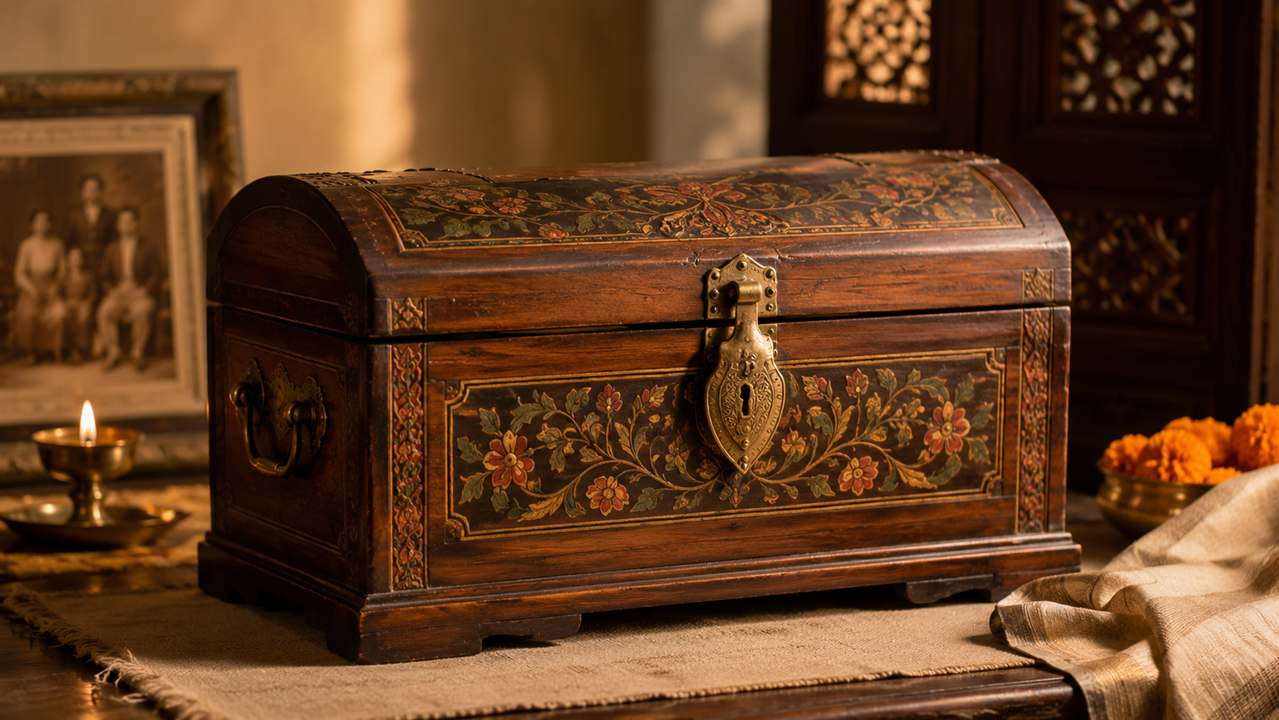
A Short Story: The Trunk That Refused to Be Forgotten

When Suhani Bhatia moved into her new apartment in Pune, her mother insisted on sending one thing from the old family home: a large metal trunk that had been sitting under the staircase for nearly twenty years.

Suhani laughed when she saw it.

The trunk was scratched, dull, and heavy enough to make two delivery boys complain all the way up to the fourth floor. Its corners were rusted, the latch was stiff, and the surface had that tired grey look old storage trunks get when nobody has loved them for a long time.

“Ma, what am I supposed to do with this?” Suhani asked on a video call.

Her mother smiled. “Open it first.”

Inside were old birthday cards, school certificates, faded photographs, her father’s handwritten letters, and one tiny sweater Suhani had worn as a baby. Suddenly, the trunk did not look useless anymore. It looked like a room full of memories folded into metal.

Still, it did not belong in her bright new living room. So Suhani brought it to V’s Art Atelier for antique restoration.

She expected a simple repaint. What she got back felt like magic.

The dull grey trunk had become a hand-painted coffee table in soft teal, warm ivory, and muted gold. The old latch had been polished, new gold hardware added charm, and sleek legs lifted it off the floor. It still felt like the same trunk, but now it looked proud.

A week later, when her mother visited, she stopped at the living room door.

“That’s our trunk?” she whispered.

Suhani nodded. “Same memories. Better outfit.”

Her mother ran her hand over the painted surface and laughed with wet eyes. That evening, they sat beside it with chai, opening old photographs one by one.

And just like that, a forgotten trunk became the most loved piece in the house.

The Art of Returning

Some things don’t age,
they simply wait–
under staircases,
behind curtains,
inside cupboards
where old stories breathe softly.

A trunk with rusted corners
still remembers wedding silks.

A faded idol still holds silence
like morning prayer in cupped hands.

A wooden sculpture, dull with years,
still carries the warmth
of the person who once chose it with love.

Do not call them broken too quickly.
Do not mistake dust for defeat.

Even the tired surface of an old keepsake
may be hiding a second sunrise.

With gentle hands,
colour returns.

Gold finds the carved lines.
Wood drinks light again.

A forgotten box becomes a table
where chai is shared,
laughter lands,
and memories sit proudly in the centre of the room.

This is antique restoration–
not a fight against time,
but a conversation with it.

At V’s Art Atelier,
we listen to the crack,
the curve,
the faded paint,
the quiet “please don’t throw me away”
inside every cherished piece.

Because some gifts are not bought new.
Some gifts are brought back.

And when an old object returns
with a renewed face
and the same old soul,
a home does not just look beautiful–
it remembers.

Testimonials for V’s Art Atelier Antique Restoration

“I gifted my parents the restoration of an old metal trunk that had been in our family for decades, and honestly, I did not expect it to become the highlight of their living room. V’s Art Atelier transformed it into a hand-painted coffee table with such elegance that it still carries our family history, but now feels completely at home in a modern space. The detailing, the gold hardware, and the finish made it feel like a luxury décor piece rather than just an old trunk repaired. My mother became emotional when she saw it because the memory was still there, only beautifully renewed.”

Devansh Malhotra, Gurugram

“For my sister’s housewarming, I wanted something more meaningful than a regular home décor gift. I had an old wooden keepsake box restored by V’s Art Atelier, and the final piece felt deeply personal, refined, and full of warmth. The colours were customised to suit her new home, and the hand-painted finish made it look like something made especially for her, not picked in a rush. She now uses it to store wedding cards and small memories, which makes the gift feel even more special.”

Ishita Rao, Bengaluru

“My wife had a faded Buddha statue from her childhood home, and I wanted to surprise her by getting it restored for our anniversary. V’s Art Atelier gave it a stunning black-and-gold finish while keeping its calm, spiritual presence intact. It now sits in our reading corner and somehow makes the whole room feel more peaceful and elevated. What impressed me most was how the restoration did not erase the old charm; it simply brought back the dignity of the piece.”

Pranav Kulkarni, Pune

“I gifted my mother the restoration of a sentimental mother-and-child sculpture that had been sitting in our old showcase for years. The piece had emotional value, but it looked dull and forgotten. V’s Art Atelier refreshed it with colour, polish, and delicate detailing without making it feel artificial. When my mother saw it, she kept touching the sculpture quietly, almost like she was meeting an old memory again. That moment made the gift priceless.”

Saanvi Mehta, Mumbai

“I chose V’s Art Atelier for an antique restoration project before Diwali because I wanted to revive a few old décor pieces instead of buying something new. The restored pieces looked festive, premium, and wonderfully personal. One old trunk became a statement centrepiece, and a faded idol was restored so beautifully that it became part of our festive setup. The work felt luxurious, but not showy. It had soul, which is exactly what I wanted for my home and family.”

Arjun Bedi, Delhi

That old trunk, that quiet idol, that faded sculpture, that keepsake box you keep moving from one shelf to another because you cannot quite let it go–these are not just objects waiting for repair. They are memories asking for a little attention. And when they are restored with care, they do something beautiful: they return to your home with the same soul, but a renewed presence.

Thoughtful gifting works in the same way. A handcrafted gift should not feel like something chosen in a hurry. It should feel personal, artistic, and worthy of the occasion. Whether you are choosing a wedding keepsake, a luxury housewarming gift, an eco-friendly festive gift, a personalised décor piece, or an antique restoration for someone you love, the best gifts are the ones that feel connected to the person receiving them.

V’s Art Atelier brings that connection into every creation. Our handcrafted gifts and restored pieces are made for homes that value warmth over sameness, meaning over excess, and artistry over ordinary gifting. We help you turn forgotten objects into statement décor, sentimental pieces into treasured keepsakes, and special occasions into memories that stay visible long after the celebration ends.

So, when you are ready to gift something that does not feel predictable, rushed, or forgettable, explore V’s Art Atelier with the person and occasion in mind. Choose a piece that speaks softly but stays remembered. Choose a handcrafted creation that feels personal, artistic, and made to be kept.

FREE SHIPPING

Because You Deserve It!

100% SAFE & SECURE

Your Trust Matters